Ditch the Chemicals: How Real Food and Playful Teasing Protect Your Kids from Ultra-Processed Foods
By Michael Young, founder · Published
Walk down any grocery store aisle and you'll be met with brightly colored packages engineered to be irresistible to a five-year-old. These are ultra-processed foods (UPFs): sugary cereals, neon fruit snacks, packaged pastries, instant "kid" meals, loaded with emulsifiers, artificial flavors, and hidden sugars.
Protecting your children from them doesn't have to be a grueling war fought three times a day at the table. Pair intentional nutrition with a little bit of lighthearted fun, and you can raise kids who genuinely prefer real, wholesome food, not because you forced it, but because you made it more interesting than the alternative.
The Scale of the Problem
Regulatory standards for food additives vary widely by country: the EU restricts many colorants, preservatives, and emulsifiers that are still common in the US market, and independent research groups have estimated the number of distinct ultra-processed products sold in the US runs into the thousands. The exact count depends on how you define "ultra-processed," but the pattern holds: American kids have far more UPFs in their environment than their European counterparts, and easy access shapes what they end up eating.
Ultra-Processed Foods | FDA
The health stakes are real. UPF-heavy diets are linked to higher rates of childhood obesity, insulin resistance, and poor nutrient intake, and one of the more troubling patterns researchers point to is kids who are simultaneously overweight and undernourished, because a diet built on processed calories can be calorie-dense and nutrient-poor at the same time.
Recognizing the Enemy: What to Spot on the Label
Ultra-processed foods hide in plain sight. A good rule of thumb: if you wouldn't find the ingredient in a typical home kitchen, it's probably ultra-processed.
Watch for these common culprits:
- Sugary breakfast cereals: added colors (Red 40, Yellow 5) and high-fructose corn syrup.
- "Fruit" snacks: often just sugar, gelatin, and dye, with zero actual fruit fiber.
- Packaged pastries and muffins: industrial seed oils, hydrogenated fats, and long lists of shelf-stabilizing preservatives.
- Instant meals and "kid" nuggets: heavy breading, emulsifiers, and sodium-heavy flavor enhancers designed to make bland meat taste like a craving.
- Flavored yogurts: can carry as much sugar as dessert, plus artificial thickeners and vague "natural flavors."
If the ingredient list runs longer than five items and contains words you can't pronounce, that's your red flag.
Strategy 1: Lead With Real, Whole Foods
The most effective way to crowd out ultra-processed food is to fill the plate with things that still look like where they came from.
- Keep it recognizable. An apple is an apple, a carrot is a carrot, and the body knows exactly what to do with single-ingredient foods: fresh produce, quality proteins, healthy fats like avocado and olive oil.
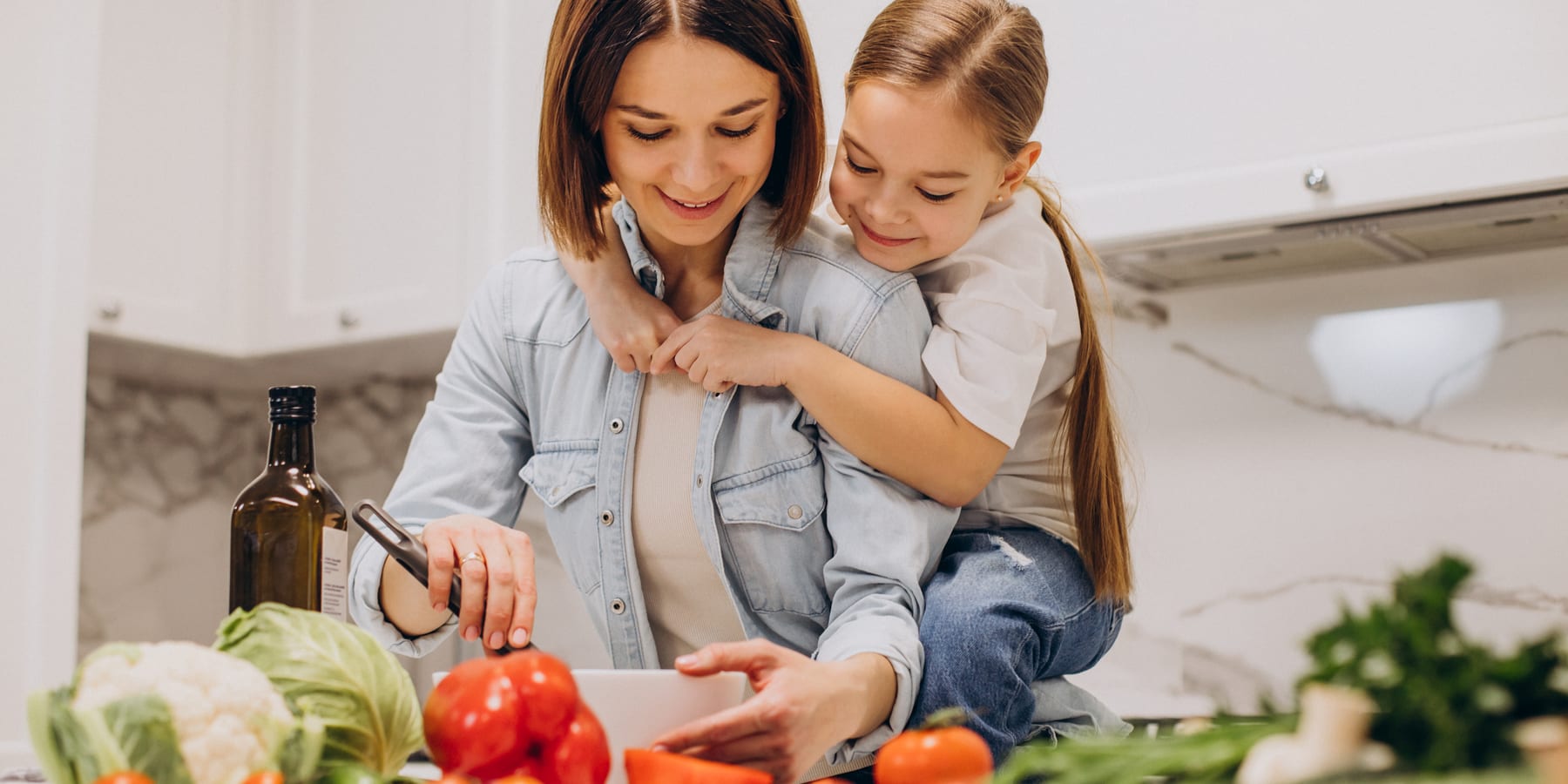
- Involve them in the kitchen. Kids are far more likely to eat something they helped make. Let toddlers wash vegetables or stir safe ingredients; older kids can chop or build their own snack plates.
- Out of sight, out of mind. The easiest way to skip the junk food fight is to not have junk food in the pantry.
Strategy 2: Use Playful Teasing to Make Healthy Eating Fun
Strict rules around food can backfire: they create shame, or turn forbidden snacks into high-value treasure. Instead, use humor to defuse the tension and change how your kids feel about real food.
- The "Superpower" tease. "I bet your little arms couldn't possibly lift this broccoli tree. I bet you're too weak to eat a carrot crunch!" Kids love proving adults wrong, and suddenly eating a vegetable is a heroic feat of strength.
- Give food a personality. "Wait a minute, Mr. Bell Pepper, are you telling me you're crunchier than my chips? I don't believe it. Let's test that right now."
- The "Mystery Bite." Play a blindfolded guessing game with real-food ingredients, and tease them when they guess wrong: "Oof, you thought that was a cookie? That's a sweet potato, buddy. Your tastebuds need an upgrade!"
- The "Too Fancy For You" challenge. Tell them a food is for grown-ups only: "actually, this one might be too spicy/fancy/grown-up for kid tastebuds." Nothing motivates a kid to eat spinach faster than being told they can't have it.
Humor disarms resistance. When food is tied to laughter and connection instead of lectures and pressure, kids lower their guard on their own.
Raising Resilient Eaters
This isn't about perfection: it's about building a foundation. Prioritize real, nourishing meals, keep the table light and playful, and you're teaching a skill that lasts a lifetime: how to fuel the body well while actually enjoying the process.
Tonight's challenge:
pick one vegetable on the plate and give it a personality. See how fast "I won't eat that" turns into "prove it."
A Message from the Heart….
Michael Young
MyEverheart Founder